Buy 擁壁.com ?
We are moving the project
擁壁.com .
Are you interested in purchasing the domain
擁壁.com ?
domain@kv-gmbh.de · 0541-91531010
Buy 擁壁.com ?
Which threadlocker is used for motorcycle oil change?
For a motorcycle oil change, it is recommended to use a medium-strength threadlocker such as Loctite 243 or Loctite 242. These threadlockers are designed to prevent fasteners from loosening due to vibration and can withstand the heat and oil present in the engine. Applying a small amount of threadlocker to the threads of the drain plug before reinstallation can help ensure that it stays securely in place during operation. Always refer to the manufacturer's recommendations and instructions when using threadlockers for any maintenance on your motorcycle. **
Can I use this threadlocker for loose pedals?
Yes, you can use threadlocker for loose pedals. Threadlocker is a type of adhesive that can be applied to the threads of bolts and screws to prevent them from coming loose. It can help secure pedals to the crank arms and prevent them from unscrewing during use. Just make sure to use the appropriate strength of threadlocker for the size and material of the pedal threads. **


Similar search terms for PETEC-91005-Threadlocker
Top-Angebote
Products related to PETEC-91005-Threadlocker:
-
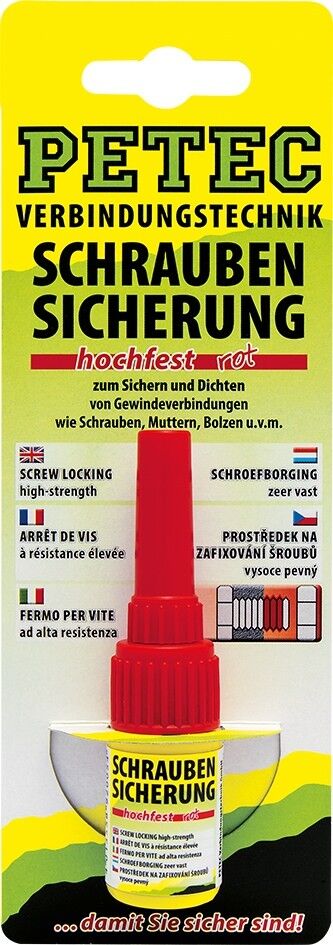
PETEC 93010 ThreadlockerContainer Type: Bottle; Capacity [ml]: 10; Quantity Unit: Gram; Colour: green; Chemical Properties: High-strength, hardening, Heat-resistant, Fuel-Resistant, Oil resistant, Saltwater-Resistant, Chemical Resistant; Release Torque [Nm]: 35; Tensile Strength [N/mm²]: 30; Temperature range from [°C]: -55; Temperature range to [°C]: +175; Observe technical data: ; Observe assembly information: ; Liquid:5,99 £*Shipping: 8,45 £Secure redirect to the provider


-
What are heat-retaining materials?
Heat-retaining materials are substances that have the ability to trap and hold heat for an extended period of time. These materials are often used in insulation to prevent heat loss in buildings or to keep objects warm. Common examples of heat-retaining materials include wool, fiberglass, and certain types of foam. By using these materials, energy consumption for heating can be reduced, making them environmentally friendly options. **
-
Is the construction of these components learned more in engineering design or in fixture design?
The construction of these components is typically learned more in engineering design rather than fixture design. Engineering design focuses on the overall functionality, performance, and structural integrity of the components, while fixture design is more concerned with the specific tools and equipment needed for manufacturing and assembly processes. Engineers are trained to understand the principles of material properties, manufacturing processes, and design considerations that are essential for creating effective components. **
-
Are construction materials vegetarian?
Construction materials are not considered vegetarian because they are not derived from living organisms. Materials such as concrete, steel, and glass are manufactured from non-living sources such as minerals, chemicals, and metals. Therefore, they do not fall under the category of vegetarian or non-vegetarian. **
-
Why does a construction worker need knowledge about construction materials?
A construction worker needs knowledge about construction materials to understand the properties, uses, and limitations of different materials. This knowledge helps them make informed decisions about which materials to use for specific projects, ensuring the structural integrity and safety of the building. Additionally, understanding construction materials helps workers identify potential issues or defects in materials, leading to better quality control and preventing costly mistakes during construction. Overall, having knowledge about construction materials is essential for construction workers to perform their job effectively and efficiently. **

How can one quench in materials engineering?
In materials engineering, quenching refers to the rapid cooling of a material from a high temperature to a lower temperature. This process is typically done by immersing the material in a quenching medium such as water, oil, or air. The goal of quenching is to achieve specific material properties such as increased hardness and strength. By controlling the quenching process, materials engineers can tailor the microstructure and properties of the material to meet the desired performance requirements for a particular application. **
What building materials or construction is this?
This is a traditional Japanese building constructed using wood and paper. The wooden framework is typically made from cedar or cypress, and the walls are often made from paper screens called shoji. The roof is usually made from thatched straw or ceramic tiles. This type of construction allows for flexibility and natural ventilation, and is well-suited to Japan's climate and seismic activity. **
Top-Angebote
Products related to PETEC-91005-Threadlocker:
-
Which threadlocker is used for motorcycle oil change?
For a motorcycle oil change, it is recommended to use a medium-strength threadlocker such as Loctite 243 or Loctite 242. These threadlockers are designed to prevent fasteners from loosening due to vibration and can withstand the heat and oil present in the engine. Applying a small amount of threadlocker to the threads of the drain plug before reinstallation can help ensure that it stays securely in place during operation. Always refer to the manufacturer's recommendations and instructions when using threadlockers for any maintenance on your motorcycle. **
-
Can I use this threadlocker for loose pedals?
Yes, you can use threadlocker for loose pedals. Threadlocker is a type of adhesive that can be applied to the threads of bolts and screws to prevent them from coming loose. It can help secure pedals to the crank arms and prevent them from unscrewing during use. Just make sure to use the appropriate strength of threadlocker for the size and material of the pedal threads. **
-
What are heat-retaining materials?
Heat-retaining materials are substances that have the ability to trap and hold heat for an extended period of time. These materials are often used in insulation to prevent heat loss in buildings or to keep objects warm. Common examples of heat-retaining materials include wool, fiberglass, and certain types of foam. By using these materials, energy consumption for heating can be reduced, making them environmentally friendly options. **
-
Is the construction of these components learned more in engineering design or in fixture design?
The construction of these components is typically learned more in engineering design rather than fixture design. Engineering design focuses on the overall functionality, performance, and structural integrity of the components, while fixture design is more concerned with the specific tools and equipment needed for manufacturing and assembly processes. Engineers are trained to understand the principles of material properties, manufacturing processes, and design considerations that are essential for creating effective components. **
Similar search terms for PETEC-91005-Threadlocker
-
PETEC 93010 ThreadlockerContainer Type: Bottle; Capacity [ml]: 10; Quantity Unit: Gram; Colour: green; Chemical Properties: High-strength, hardening, Heat-resistant, Fuel-Resistant, Oil resistant, Saltwater-Resistant, Chemical Resistant; Release Torque [Nm]: 35; Tensile Strength [N/mm²]: 30; Temperature range from [°C]: -55; Temperature range to [°C]: +175; Observe technical data: ; Observe assembly information: ; Liquid:5,99 £*Shipping: 8,45 £Secure redirect to the provider
-
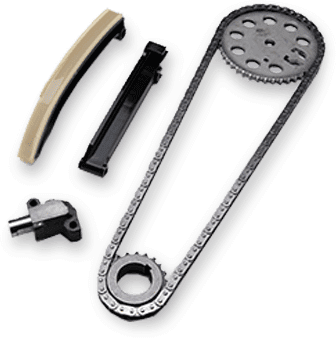
SKF VKML 91005 Timing chain kitChain Type: Simplex, Closed chain; Timing Chain Size: 8; Number of chain links: 120; for model code: NCP22, NCP20, NCP10, NZE120, NCP16, NCP19, NCP11, NCP15, NCP30; Construction Year to: 01/2004; Engine Code: 2NZ-FE81,99 £*Shipping: 8,45 £Secure redirect to the provider
-
AISIN ATF-91005 Automatic transmission fluidCapacity [litre]: 5; Exceeds specifications: Aisin Warner JWS3324, Ford Mercon LV/SP, GM Dextron VI, Honda ATF DW1, Hyundai/Kia SPIV, Mazda FZ, Nissan Matic S, Toyota/Lexus ATF WS; Manufacturer recommendations: MB 236.41, Nissan Matic K; Product line: ATF 6+ Fuel Economy; Oil Viscosity Classification SAE: ATF VI; Container Type: Canister; Colour: red; Liquid: ; Transmission Number: RE1F61A, P410 1/1, AC60F 6/1, A750F 5/1, 6T40/6T45 6/1, 6/1, 6L90 6/1, 5/1, A6GF1 6/1, GM 6T40/45/50 6/1, Daimler GA7AHSCD AHS, RE7R01A 7/1, AB60F 6/1, A6LF2 6/1, HPT 6/1, A6LF3 6/1, RE4F03C 4/1, A8LR1 8/1, RE7R01H, M99 4/1, 1/1, Hydra-Matic 6T70 6/1, 6F24 6/1, GM 6T30 6/1, RE6F01A 6/1, A6MF1 6/1, A6MF2 6/1, eCVT 1/1, Hydra-Matic 6L45 6/1, 6T70 6/1, 6R80 6/1, 7/1, RE5R05A 5/1, GM A5S 360R/390R 5/1, A761E 6/1, TX6A 6/1, 4/1, 4F27E 4/1, 5L40E 5/1, GM GA6L45R (GM6) 6/1, A960E 6/1, U140F 4/1, 19339, AA80E 8/1, FW6A-EL 6/1, GW6A-EL 6/1, U340E 4/1, V5AWF 5/1, 6F35 6/1, 6L80 6/1, 4L60-E 4/1, U660E 6/1, U660F 6/1, AA80F 8/1, 6L80 (MYC) 6/1, L110F 1/1, FW6AX-EL 6/1, GW6AX-EL, A6MF2H 6/1, 8/1, A8TR1 8/1, 4L70-E 4/1, 4L80-E 4/1, 6L90-E 6/1, P510 1/1, Jatco JF414E 4/1, L210 1/1, RE7R01B 7/1, A6LF1 6/1, A6MF1-1 6/1, U661E 6/1, U661F 6/1, 6T30 6/1, Q410 1/1, CW6A-EL 6/1, EW6AX-EL 6/1, EW6A-EL 6/1, 6T35 6/1, P314 1/1, P313 1/1, AA81E 8/1, A6LF2-2 6/1, A6GF1-2 6/1, P314; Construction Year from: 01/2010, 04/2008, 06/2008, 10/2004, 06/2011, 01/2012, 02/2009, 01/2009, 08/2000, 08/2001, 08/2002, 11/2004, 03/2007, 08/2006, 01/2007, 06/2016, 11/2006, 09/2007, 10/2006, 06/2007, 10/2008, 05/2008, 03/2009, 06/2009, 11/2009, 04/2010, 11/2014, 09/2012, 12/2012, 06/2013, 04/2012, 01/2014, 09/2013, 09/2014, 09/2015, 01/2008, 01/2016; Vehicle type: Land Cruiser 150, Navara, Land Cruiser V8, Korando, iX35, Sonic, Aveo, Prius+, Sportage, Insignia, Pajero, Land Cruiser Prado, Prado, 325i, 325i Touring, RAV 4, Mokka, Mokka X, Montero, Land Cruiser 120, Qashqai, Qashqai+2, Mondeo, Hilux, 330i xDrive Touring, Elantra, Accord, Land Cruiser 200, 325i xDrive, Shogun, Land Cruiser, Prius, Equus, Centennial, Yaris, Santa Fe, Optima, Carens, Genesis Coupe, L200, Azera, Tucson, RX 200t, RX 450h, 3; Construction Year to: 12/2012, 12/2014, 12/2011, 04/2016, 12/2015, 07/2014, 12/2010, 06/2002, 07/2002, 02/2007, 10/2006, 05/2011, 02/2010, 05/2015, 08/2015, 08/2016, 07/2013, 08/2014, 12/2013, 03/2022, 09/2013, 06/2018, 02/2018, 02/2014, 09/2017, 10/2015, 04/2023, 12/2016, 11/2017, 09/2020; for model code: Santa Fe, Grand Santa Fe, Sonic, Aveo, Tourneo Connect, Grand Tourneo Connec66,49 £*Shipping: 8,45 £Secure redirect to the provider
-
Are construction materials vegetarian?
Construction materials are not considered vegetarian because they are not derived from living organisms. Materials such as concrete, steel, and glass are manufactured from non-living sources such as minerals, chemicals, and metals. Therefore, they do not fall under the category of vegetarian or non-vegetarian. **
-
Why does a construction worker need knowledge about construction materials?
A construction worker needs knowledge about construction materials to understand the properties, uses, and limitations of different materials. This knowledge helps them make informed decisions about which materials to use for specific projects, ensuring the structural integrity and safety of the building. Additionally, understanding construction materials helps workers identify potential issues or defects in materials, leading to better quality control and preventing costly mistakes during construction. Overall, having knowledge about construction materials is essential for construction workers to perform their job effectively and efficiently. **
-
How can one quench in materials engineering?
In materials engineering, quenching refers to the rapid cooling of a material from a high temperature to a lower temperature. This process is typically done by immersing the material in a quenching medium such as water, oil, or air. The goal of quenching is to achieve specific material properties such as increased hardness and strength. By controlling the quenching process, materials engineers can tailor the microstructure and properties of the material to meet the desired performance requirements for a particular application. **
-
What building materials or construction is this?
This is a traditional Japanese building constructed using wood and paper. The wooden framework is typically made from cedar or cypress, and the walls are often made from paper screens called shoji. The roof is usually made from thatched straw or ceramic tiles. This type of construction allows for flexibility and natural ventilation, and is well-suited to Japan's climate and seismic activity. **
* All prices are inclusive of VAT and, if applicable, plus shipping costs. The offer information is based on the details provided by the respective shop and is updated through automated processes. Real-time updates do not occur, so deviations can occur in individual cases. ** Note: Parts of this content were created by AI.